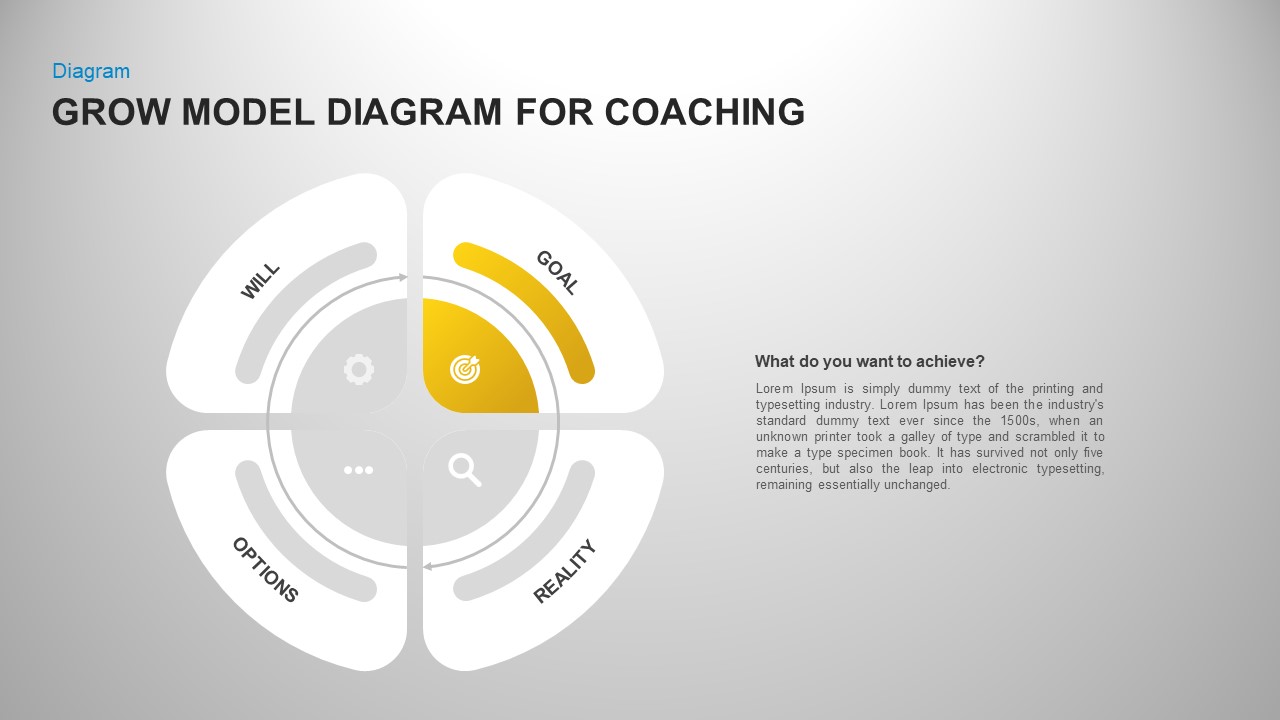
It’s an acronym that stands for goals, reality, options and will. Sometimes, it’s all it takes to turn a team into a dynasty.
Grow Model Coaching PowerPoint Template Slidebazaar
This model is a great way to structure developmental discussions with staff members and to help team members come.
Coaching using the grow model. For those new to coaching the grow model does provide a very useful framework. The goal is the first step which allows you to plan; There is an element of looking back to see what has happened in the past and how this has shaped the present.
This involves considering the present with all its challenges and opportunities. Goal, reality, obstacles (or options), and way forward (or will). A huge proportion of business and life coaches use the grow coaching model as a way to help their clients set realistic and achievable goals.
Sabine dembkowski and fiona eldridge gives an idea of a new seven step model that can be used. The grow model might have been innovative in 1992, but with the diverse range of coaching approaches that have subsequently evolved in the market the simple grow model looks a little “passe. Listed below are suggestions for how it can be used in both individual and group coaching.
Although the grow model has been around since the early 1990s (whitmore, 1992), it has only been empirically measured over the last decade (alexander & renshaw, 2005). Assess current creative alternatives of current While companies still uses grow model to simplify the coaching styles and models that they will be using, some are developing further.
But even if the name doesn’t ring. By helping the coachee really identify what they want from the conversation it does help prevent it from becoming an aimless chat. Using the grow model of coaching and mentoring.
A recent journal article by dr. First, you and your team member need to look at the behavior that you want to change, and then structure this change as a goal that they want to achieve. The second step, the reality, alerts you to your current situation;
It is a behavioural model that focuses on external. This can mean facing some uncomfortable truths or confronting the brutal facts. The achieve model) and problem solving approaches (e.g.
The grow coaching model is a great starting place for anyone faced with helping a team or an individual reach a desired goal. Options could be behavior, actions or decisions that lead. As the graphic shows, grow is an acronym for the four key stages in a successful coaching conversation:
One that is specific, measurable, attainable,. The name is an acronym of the four steps: The a3 problem solving model.) a lot of coaching is about helping people get from here to there… to use the grow coaching model, simply walk through its stages in a conversation with the person you are looking to coach.
If the goal is ‘smartend’ up you have a specific, measurable, achievable, relevant goal with a time limit on it so both coach and. The next step in the grow model is looking at the reality of the situation. It declares the seven steps as follows:
This simple framework is used by life coaches, leaders in organizations and executive coaches alike. This approach forms the basis for several other coaching models (e.g. To structure a coaching or mentoring session using the grow model, take the following steps:
The grow model of coaching was originally developed by business coaches sir john whitmore, graham alexander and alan fine. The next step is to find out which of the options is feasible and will have the highest possibility of being successful. Once you and your client know where she is and where she wants to go it’s time to explore and evaluate the options.
Don't mentally prepare a rebuttal! The questions in the exercise help raise your awareness, which encourages you to take responsibility for achieving your goal. The model provides a tried and tested framework for performance improvement and people development.
The third step, the options and obstacles, help you consider how to ultimately get where you are going promptly and easily; What the grow coaching style is. Make sure that this is a smart goal:
Managers don’t need to have perfect coaching skills to be able to lead their employees to success. There are four aspects of the grow model. How to use the tool.
Note your posture and make sure it is open and inviting. The grow model is a coaching framework used in conversations, meetings and everyday leadership to unlock potential and possibilities. The principles are so solid that it is simple as well as powerful.
Step 3 of the grow coaching model: The fact that you come up with your own solutions will also raise your confidence that you can achieve your goal. It has since become the world’s most popular coaching model for problem solving, goal setting and performance improvement.
And the final step, the will. And if you add a coaching mindset and. The reality part of the grow model should also include talking about feelings and digging into emotions.
The grow model is a type of blueprint akin to making plans for a trip.
Coined by psychologist bruce tuckman in his 1965 article developmental sequence in small groups, the forming, storming, norming and performing model of group development explains how groups form and what happens in each stage of group development. 2 using the forming storming norming and performing stage for team development.
Storm To Perform The 4 Stages Of Team Productivity
Tuckman’s model is a framework for identifying behaviors on your team, but, as noted by mit, it shouldn’t be used to “box” the team into a profile or “diagnosis.” stage 1:
Form storm norm perform model. The name refers to each of the four stages of group development and gives an indication of. Bruce tuckman's model with the stages a team goes through to get high performance. This model was first developed by bruce tuckman in 1965.
The tuckman model describes the phases that groups of individuals go through when they first begin working together as a team. It is one of the more known team development theories and has formed the basis of many further ideas since its conception. Admin — august 17, 2020.
This beginning stage typically happens on the first day or two of camp, though as with any level in this theory, there is no set defined time period. Bruce tuckman first introduced the form, storm, norm, perform model of team growth in 1965. During this introductory stage, conversation between group members tends to be polite, superficial, and exploratory.
Bruce tuckman's forming, storming, norming, and performing model describes these stages. Teams move through each stage as they overcome challenges, learn to work together and eventually focus on accomplishing a shared goal. His work was based on reviewing over works on team theory and categorised them in stages.
This process comprises of four most important stages. It should be noted that a team can return to any phase within the model if they experience a change, for example a review of their project or goals or a change in. Using this model, an extension professional can help a new team come together and work effectively sooner.
After a while, the halo effect of the newness wears off and when the team realizes there’s actual work to be done, there tends to lose momentum. When teams first get together there is a level of excitement and newness and exuberance to make great things happen. When we closely analyze these.
Because the form, storm and norm stages result in minimal group output; This is the forming stage. 2.2 take steps to help them move forward.
Every group will go through some part of each stage; Forming a team takes time, and members often go through recognizable stages as they change from being a collection of strangers to a united group with common goals. You can't expect a new team to perform well when it first comes together.
In the second phase, storming, teams challenge boundaries and get to know each other and how to work together. The more the group members. It is tempting to try to rush through or short circuit these stages, in the hope the group can achieve peak productivity quicker.
Call us 0800 975 0728. Over the years, i’ve used this model in a variety of settings and continue to be. Know each other and have worked together before, the less time spent in the first three stages.
In the first phase, forming, teams are uncertain about the team goals and how to work together. 3 moving between the stages. 2.1 look at the current status of your team.
He maintained these stages were not only predictable, but necessary and inevitable in order for a team (and i would say an organization) to achieve peak performance. The concept of forming, storming, norming and performing (fsnp) describes the four stages of psychological development a team goes through as they work on a project. Forming a real live team.
Tuckman's theory focuses on the way in which a team tackles a task from the initial formation of the team through to the. More on bruce tuckman's forming, storming, norming, performing. This is the first stage in the group building process.
In tuckman's forming storming norming performing model, hersey's and blanchard's situational leadership® model and in tannenbaum and schmidt's continuum, we see the same effect, represented in three ways. These stages are precisely described under bruce tuckman’s forming, storming, norming, performing model. A team may norm and then storm about another issue or part of the team’s charge.
First days at new jobs, first assignments with new bosses—the forming stage of teamwork is all about first meetings and first impressions. Form, storm, norm, perform and adjourn. So, most of us are familiar with dr.
Staff — january 4, 2013.
Model Of Flexibility In Hrm. For organisations to have the capacity to manage planned change and to be adaptive to uncertainties and unanticipated pressures at all levels in the organisation the structure must. Four major models have been identified for human resource management and all these serve many purposes.
Human Resource Management Roles Knowledge Center from www.12manage.com
They provide an analytical framework for studying human resource management (for example, situational factors, stakeholders, strategic choice levels, competence) 2. This essay will explore each dimension in guest’s (1987) model and the extent to which they ensure equality and diversity at work. Articulated as human resource strategy.
However, in contrast, this implies that a leader shapes other people’s values instead of working beyond requirements. Within modeling the way, there are three steps.
Pin on Leadership
The leadership behavior, modeling the way, is simply the leader doing what he or she expects the followers to do.if you expect people to speak respectfully to each other, speak respectfully to them.
Model the way leadership. Kouzes and posner created their five leadership practices model after researching people's personal experiences of excellent leadership. The first step to becoming an exemplary leader is inward, and begins with modeling the way. For and admire in a leader is personal credibility.
Since then people actually followed the ways that were mentioned in it for betterment of the business. Leadership is not simply directing a group of people to achieve a common goal, as a dictator would do rather a leader more 'guides' a group of people to want to achieve a common goal. The charismatic leadership model is no less effective than a transformational one since it also creates enthusiasm for the team.
Model the way part of being a leader means that people are always watching and trying to interpret the meaning of our words and actions. Model the way is what president lincoln exemplified. Actively empower people to strengthen the whole team.
~~leaders establish principles concerning the way people (constituents, peers, colleagues, and customers alike) should be treated and the way goals should be pursued. Do not go on the name. It sets the stage and uses actual case examples from real people who have achieved remarkable success.
On a daily basis, you must be committed and engaged in action that demonstrates your beliefs are worthwhile living. 3) leading managers to functional manager. Here we examine 100+ leadership models, covering the complexity of the topic and the impossibility to give an absolute definition.
Create standards of excellence to set an example for others to follow. The five practices of exemplary leadership®. Credibility is the foundation of leadership.
According to kouzes and posner leaders’ deeds are far more important than their words. To model the way leaders need to have a philosophy, a set of high standards by which the organization is measured, a set of principles concerning the way people should be treated, and the way goals should be pursued that make the organization unique and distinctive. Show people the possibilities for the future.
Finding your voice and serving as a role. Leadership behaviors and organizational values should be spelled out and every leader be held accountable for modeling them. An observable behavior for perseverance is a leader who seeks the support of a coach or buddy to give them direct feedback on how their.
Leaders are supposed to stand up for their Your first action is a collaborative approach where you build a consensus around the shared values of your team and organization. A book on servant leadership which was published in the year 1970 was quite popular.
Changing your behaviors can be challenging, but it is important to stay committed. A leader within a continuous improvement culture will need to be persistent in the face of difficulty. Leaders establish principles concerning the way people (constituents, peers, colleagues, and customers alike) should be treated and the way goals should be pursued.
Leaders model the way by finding their voice and setting an example. Model the way model the way is one of the five practices for exemplary leaders. These leaders show by example that they live by the values they advocate.
They create standards of excellence and then set an example for others to follow. So, as soon as we become the “boss,” step out and take a stand on an issue, or take on a project lead role, we become an object of increased attention and scrutiny. He was our president from 1861 to 1865.
If people don’t believe in the messenger, they won’t believe the message. In this short video linda alepin, aauw tucson chapter president, and her guest barbara key discuss modeling the way. 1) managing self to managing others.
You must first find your voice by clarifying your values, then you must affirm your shared values, and lastly you set the example by aligning actions with shared values. He had one full term and had been in office for only six short weeks of his second term when he was assonated. Experiment and take risks to make meaningful improvements.
1 45 minute class period. More specifically, leadership is being able to construct a common goal, plan a process to achieve this goal, and executing the plan to achieve the goal and doing. In order for students to be role models and.
You do this by setting the example. Because the prospect of complex change can overwhelm people and stifle action. Let’s see the 10 important leadership models which will make you a successful leader:
They create standards of excellence and then set an example for others to follow. But what he accomplished in such a short gives empowerment to other leaders. There are 6 steps to the leadership pipeline model created in a way that leaders are able to develop the competencies required and ultimately lead to the ability to be in charge of the organization.
Lincoln paved the way for people to understand that by doing what. Modeling the way one of the five leader. Titles may be granted, but leadership is earned.
2) managing others to leading managers. Because the prospect of complex change can overwhelm people and stifle action, they. Exemplary leaders lead the charge.
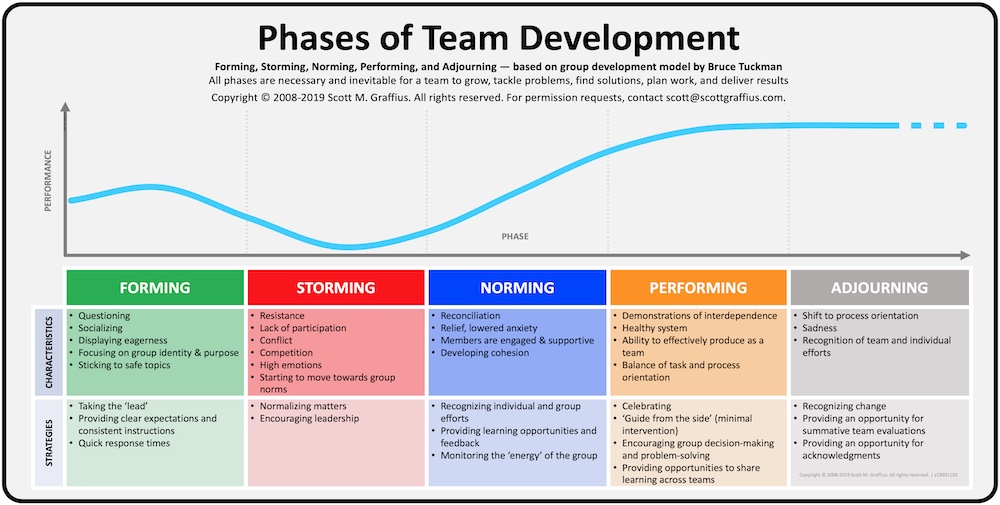
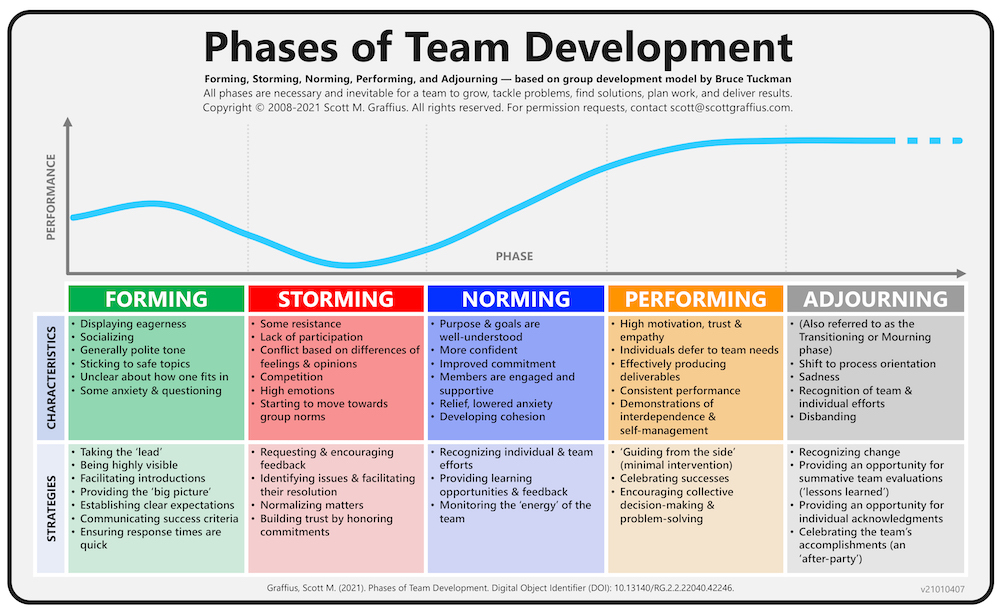
According to bruce tuckman, team development has five stages: Forming, storming, norming, and performing in groups bruce w.
Use Tuckman's Model of Team Dynamics (Forming, Storming, Norming
The forming, storming, norming, performing model was created by tuckman and it is a concept that is used by many six sigma professionals across the world.
Norming storming performing model. The most common is that teams go through a series of different levels before effectiveness is achieved. In 1977, tuckman, jointly with mary ann jensen, added a fifth stage to the four stages: Team members behave differently in each stage, and the project manager must act accordingly to help them develop.
Forming stage of group development. This model is known as the forming, storming, norming, and performing model (fsnp). Let’s now see what typically happens in each phase of the model.
In a 1965 article in the psychological bulletin, bruce tuckman introduced a team and group development model that maps a team’s. About the model psychologist bruce tuckman first came up with the memorable phrase forming, storming, norming, and performing in his 1965 article, developmental sequence in small groups. he used it to describe the path that most teams follow on. The forming, storming, norming, and performing model describes these stages.
Introducing tuckman's model psychologist bruce tuckman first came up with the memorable phrase, “forming, storming, norming, and performing” in 1965. In 1965, bruce tuckman identified four stages of development — forming, storming, norming and performing — that every team experiences. The concept of forming, storming, norming and performing (fsnp) describes the four stages of psychological development a team goes through as they work on a project.
The purpose of this phase is to create a team with clear structure, goals, direction. Teams move through each stage as they overcome challenges, learn to work together and eventually focus on accomplishing a shared goal. Dr bruce tuckman published his 'forming, storming, norming, performing' model in 1965.
He later added a fifth stage, adjourning, in the 1970s. Psychologist researcher bruce tuckman formed tuckman's model as part of his 1965 paper developmental sequence in small groups. In tuckman’s early professional career, he worked with a small group of social psychologists at the naval.
In the first phase, forming, teams are uncertain about the team goals and how to work together.in the second phase, storming, teams challenge boundaries and get to know each other and how to work together.in the norming phase, teams. Let’s discuss the stages of team formation and the role of the project manager. Much like individuals grow and develop over time, so does a team.
The idea originated in 1965 with american. In a short article titled “development sequence in small groups,” he introduced the concept of forming, storming, norming and performing as stages in team development leading to enhanced effectiveness and functioning. Similarities can be seen with other models, such as tannenbaum and schmidt.
Forming, storming, norming, performing, and adjourning. Each of the 4 steps plays a massive role in team development. 1.the tuckman model, 2.the standard team model, 3.moore's team framework, 4.the siebert model
We consider his contribution and the model's continuing use. By understanding it, you can help your team to become productive more quickly. These are known as tuckman stages.
The tuckman model describes the phases that groups of individuals go through when they first begin working together as a team. This mindtools talk explains psychologist bruce tuckman's forming, storming, norming, and performing model that gives you a great way to understand team dy. The 'forming, storming, norming, performing' theory is an elegant and helpful explanation of team development and behaviour.
The us navy tasked him, along with a group of other social psychologists, with analysing the dynamics of forming a team, and how the leadership style changes as the group develops. While many would label it as overly. They use it to predict as well as explain how their team is performing.
The first of tuckman’s stages of team development is the forming stage. In 1965, bruce tuckman produced one of the most quoted models of team development. Tuckman produced one of the most quoted models of group development in the 1960s.
Program managers, team leaders, and project managers should understand the model to enable them to better lead the team and adapt their behaviors appropriately to each stage in order to give the.