Erikson’s 8 stages of psychosocial development, explained for parents medically reviewed by timothy j. Get started for free continue.
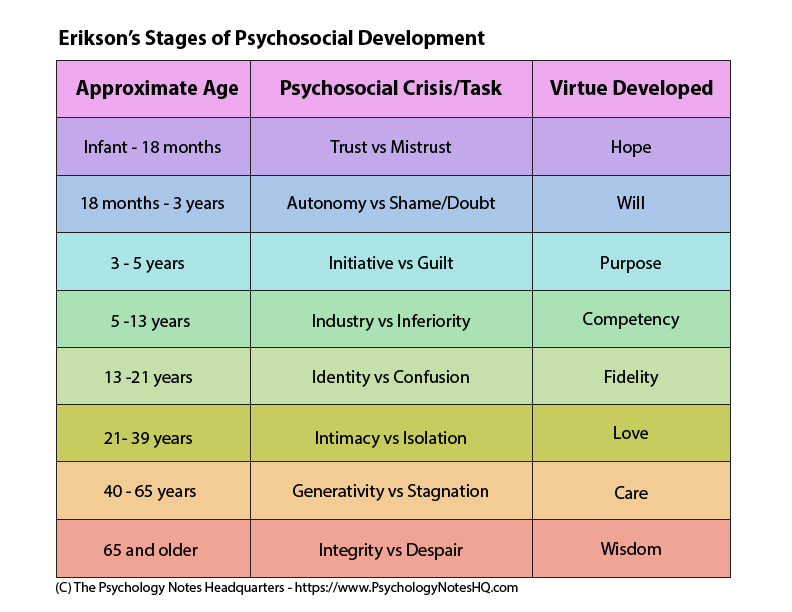
Erikson’s 8 Stages of Psychosocial Development Paypervids
The stages of psychosocial development look at our personality unfolds based on conflicts we endure from our environments to the choices we make.

Stage 4 of psychosocial development. In the first two years: “i think the main difference between stage 3 & 4. According to erikson, each stage presents the individual with a psychosocial conflict that must be resolved.
Infants need to learn to trust the adults from being born to 12 months of their age. The theory differs from many others in that it addresses development across the entire lifespan, from birth through death. Erikson’s stages of psychosocial development stage age range stage 1 major issues importance trust vs.
Learn about our medical review board. As said above, the baby becomes aware of adults around him at one month. At each stage, the individual deals with a conflict that serves as a turning point in development.
Stage four it is essential for the child at this stage to discover pleasure in being productive and the need to succeed. That influences personality and developmen t. 8 stages of psychosocial development 1.
This article throws light upon the four main stages in social development of a child. But u/coconut19 provided a great description to help you tell the two apart: In case the infant is treated cruelly they will grow up mistrusting this.
From two to six years 3. Hi steve elements of a negative outcome difficulty with the. For an individual to become fully functional we need to progress through these stages by successfully solving the conflict within the stage.
Stage of development positive outcome negative outcome; The child's relationship with peers in school and the neighborhood becomes increasingly important. In the first two years 2.
In each of these stages, there are various goals that a child must achieve, mostly with the help of their parents. It built upon freud’s theory of psychosexual development by drawing parallels in childhood stages while expanding it to include the influence of social dynamics as well as the extension of psychosocial development into adulthood.[1] it. If an infant’s needs are met, they will develop a sense of trust toward the world.
From six to twelve years 4. Although erikson did not include prenatal development in his psychosocial development theory, it is now regarded as one of the most critical periods in human development. Victoria jaque, in creativity and the performing artist, 2017.
The stage occurs during childhood between the. Erik erikson developed a theory called the “eight stages of psychosocial development.” he theorized that stages are precipitated by crises that all individuals face as they move from birth to death. Industry versus inferiority is the fourth stage of erik erikson's theory of psychosocial development, which happens after the third stage of initiative versus guilt.
For erikson (1958, 1963), these crises are of a. A sensitive, responsive caregiver leads to the infant seeing the world as a safe place. During each stage, the person experiences a psychosocial crisis which could have a positive or negative outcome for personality development.
Shame and doubt the child begins to express his or her autonomy.initiative vs. You may think that these stages overlap, just like this reddit user on the mcat subreddit. Posted on march 2, 2015.
Legg, phd, psyd — written by rhona lewis on april 28, 2020 1. Difference between stages 3 and 4 of psychosocial development. Erikson maintained that personality develops in a predetermined order through eight stages of psychosocial development, from infancy to adulthood.
This trust builds when adults or caregivers take care of their needs. Erikson’s stages of psychosocial development is a theory introduced in the 1950s by the psychologist and psychoanalyst erik erikson. Is that stage 4 is more about development in a school sense.
Mistrust the child’s experience of the world as either safe or threatening shapes the development of trust or mistrust of others autonomy vs. Eight stages of psychosocial development. The eight stages of psychosocial development are:
However, a balance between initiative and guilt remains key to developing a healthy mindset. This is the stage where the child is totally dependent for everything on their parents. These stages begin from infancy into old age.
Erikson ’ s first stage is trust vs. During this earliest stage of development, the prenate (a term that encompasses. This video views the 8 psychosocial development theory of erik erikson
When the conflict is resolved.
They also begin to feed and dress themselves.this is how the toddler strives for autonomy. He argued that social experience was valuable throughout life, with each stage recognizable by the specific conflict we encounter between our psychological needs and the.
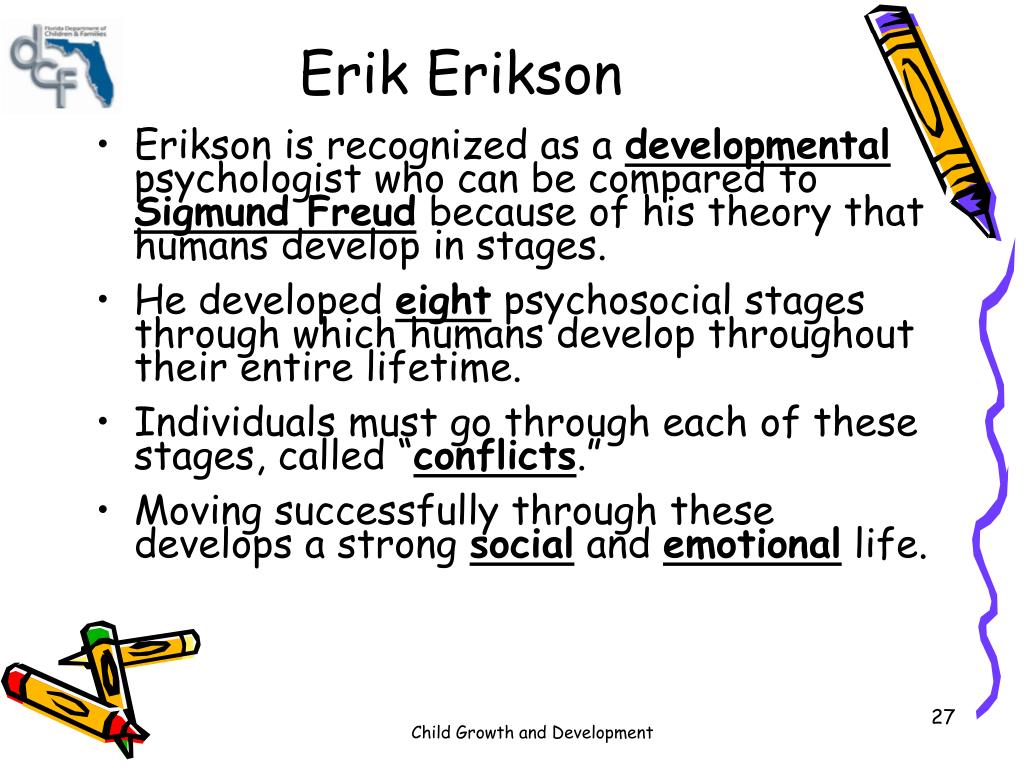
PPT Child Growth and Development PowerPoint Presentation, free
Kids learn that their environment is safe and trustworthy when they are in this stage.
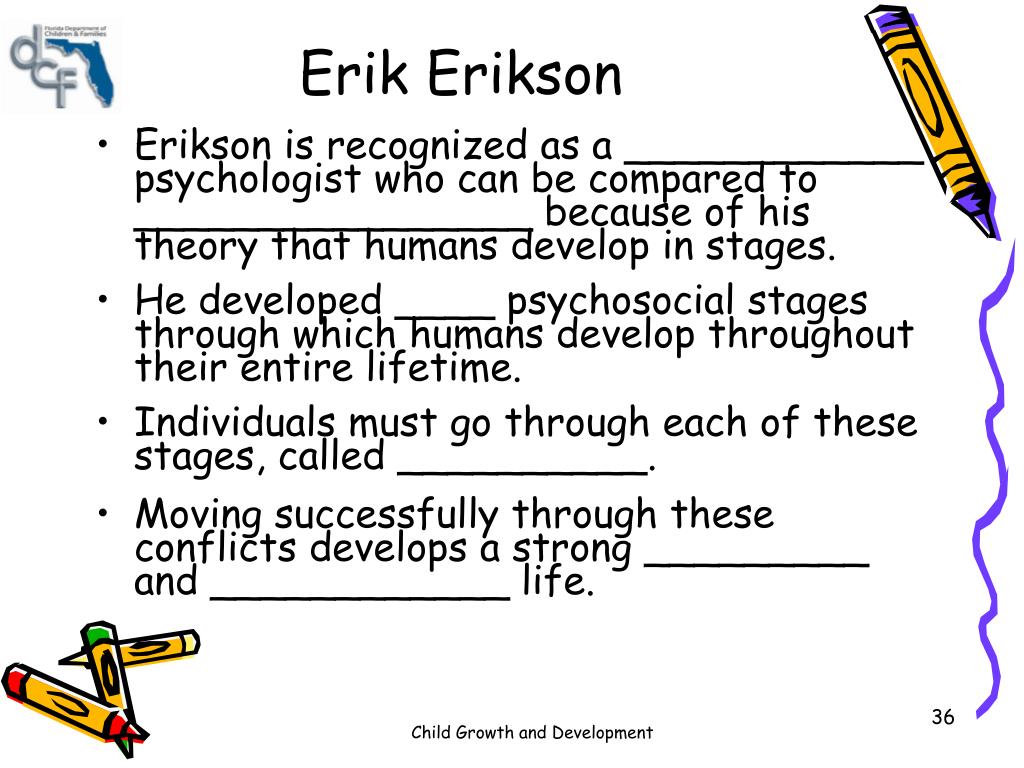
Erikson's second stage of development is called. Erikson's stages of psychosocial development, as articulated in the second half of the 20th century by erik erikson in collaboration with joan erikson, is a comprehensive psychoanalytic theory that identifies a series of eight stages that a healthy developing individual should pass through from infancy to late adulthood.according to erikson's theory the results from each. This is an important period of store and let go. This stage occurs between the ages of 18 months to around age 2 or 3 years.
Thereof, what are the 8 stages of life according to erikson? The first stage in this theory is called the trust vs. This is called latency stage, and the child has to develop a capacity for industry while avoiding an excessive sense of deficiency.
It built upon freud’s theory of psychosexual development by drawing parallels in childhood stages while expanding it to include the influence of social dynamics as well as the extension of psychosocial development into adulthood.[1] it. This stage occurs between the ages of 18 months to approximately 3 years. Shame and doubt (2nd to 3rd year of life) stage 3:
Sense of inferiority (age 6 to puberty) According to erikson, children at this stage are focused on developing a. An eight stage theory of identity and psychosocial development.
A) the oral stage b) industry versus inferiority c) trust versus mistrust It is in these situations that you develop your character. Children can do more on their own.
According to erikson, children at this stage are focused on developing a sense of personal control over physical skills and a sense of independence. Guilt (4 to 5 years of age) stage 4: Additional resources and references resources.
Autonomy versus shame and doubt is the second stage of erik erikson's stages of psychosocial development. Erikson's eight stages of psychosocial development include: This stage occurs between the ages of 18 months to around age 2 or 3 years.
Psychologist erikson viewed personality as a product of social interactions and the choices a person makes in life. Autonomy versus shame and doubt is the second stage of erik erikson's stages of psychosocial development. It is essential for parents not tobe overprotective at this stage.
Erik erikson’s (1958, 1963) psychosocial development theory proposes that our personality develops through eight stages, from infancy to old age. In other words, as you relate to other people, you go through a series of eight stages in which the goal is to develop a coherent sense of self,. This stage occurs during the first year of life and is seen as the child’s developing trust in their caregivers.
Click to see full answer. The first crisis of life, according to erikson, is _____. Erikson’s stages of psychosocial development is a theory introduced in the 1950s by the psychologist and psychoanalyst erik erikson.
Toilet training is the mostimportant event at this stage. Life stage / relationships / issues: Erikson's second stage of development is called _____.
Autonomy versus shame and doubt is the second stage of erik erikson's stages of psychosocial development. Erikson’s psychosocial theory is a way of learning about people. According to erikson, self control and self confidence begin to develop atthis stage.
Primordial mistrust (1st year of life) stage 2: Handbook of identity theory and research [2 volume set]: The life cycle completed (extended version):
While erikson believed that each stage of psychosocial development was important, he placed a particular emphasis on the development of ego identity. He presented the ego “in development” as personal identity, shaped and molded by an individual’s experiences.