The adjourning stage stands alone as an expansion to the original four stages of tuckman’s stages of team development in 1965. ’ s (1965) group development model describes four stages of team development:
Vijf Fases van groepsvorming Levi Laaper
Usually, there's a group leader present who, in the first few group meetings, manages most of the agenda.
Tuckman 1965 stages of group development. During the developmental phase, the leader of the group also adopts a new leadership style. Bruce tuckman proposed a group developed model in 1965, the five stages of group. The most common is that teams go through a series of different levels before effectiveness is achieved.
In 1965, bruce tuckman identified four stages of development — forming, storming, norming. Here, the group is evaluated beyond the primary purpose of the forming, storming, norming and performing, looking at individual vulnerabilities in people such as insecurities resulting from the change. Tuckman's stages of group development indicate how behaviour evolves among the members of a group and how and when these changes manifest in a team.
Introduction over the past two decades, it seems that teamwork has become increasingly important and more companies have formed different teams and groups for various purposes (samson & daft, 2012). (1965) developmental sequence in small groups. Tuckman’s theory assists group members in subduing the group barriers.
Developmental sequences in small groups. Tuckman's theory of group development. (1977) stages of small group development.
Big ideas simply explained — the business book. The five stages of tuckman’s theory of communication are forming, storming, norming, performing, and adjourning. Bruce tuckman’s 5 stages of team development:
Bruce tuckman, both jointly worked. Tuckman naval medical research institute, bethesda, maryland 50 articles dealing with stages of group development over time are separated by group setting, as follows: The openness to other group members is researchers emphasizing the more dependent characteristic in both realms during this stage.
Forming, storming, norming and performing. This article provides background on each stage and an example of a team going through all five stages. The five stages of group development are critical because it ensures that all the team members are working together to achieve the project’s goal.
Later he added a 5th stage, ‘adjourning’ to the model in the 1970s. Tuckman, a psychologist at ohio state university, published a theory in 1965 called ‘tuckman’s stages of group development.’. Stages of small group development.
In the forming stage, the group is just getting to know one another. The psychologist bruce tuckman established these in 1965 in his work, developmental sequence in small groups. Tuckman’s stages displayed on a flipchart or power point.
Tuckman’s stages of group development is a concise and elegant framework for team development and behavior. In 1965, bruce tuckman identified four stages of development — forming, storming, norming and performing — that every team experiences. In 1977, with the help of another educational.
In 1965, tuckman introduced the five stages of team development theory named. Based on his observations of group behaviour in different settings and on literature study, he came up with a model representing the different phases groups need to go through to grow as a team. Coconstruct was founded in 2005.
The idea behind the model is you can’t expect a new team to form. Bruce tuckman was a psychologist who developed the theory of 5 stages of development in 1965, the model consisted of forming, storming, norming and performing areas. Tuckman's five stages of group development each represent a different process that goes into reaching the group's goals:
The team growth framework suggests that unless the issues of processes. It also helps to adjust them in. During the forming stage, new teams.
The initial forming stage is the process of putting the structure of the team together. In 1965, bruce tuckman, an educational psychologist developed one of the most influential models for group formation. The study initially included four steps.
In 1977, tuckman, jointly with mary ann jensen, added a fifth stage to the four stages: Tuckman’s stages of group development were developed by psychologist bruce tuckman in 1965. A study on tuckman’s stages of group development model 1.
As tuckman knew these inevitable phases were critical to team growth and development, h…
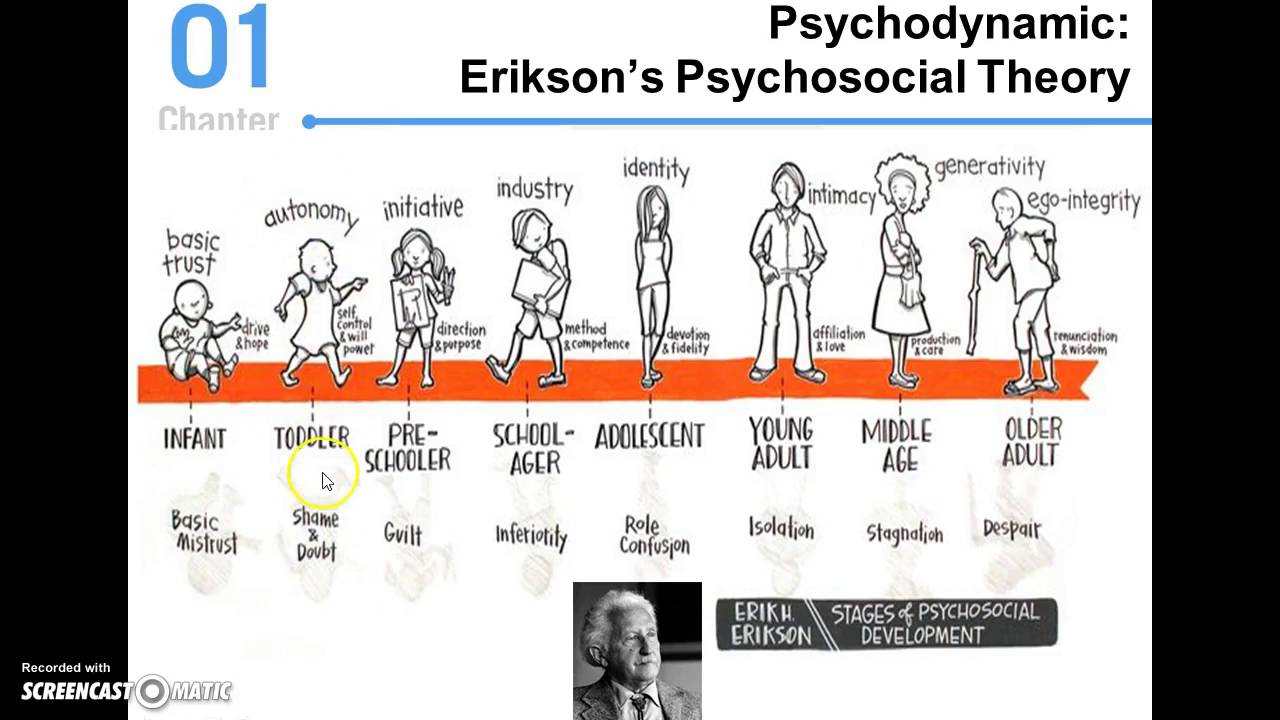
Eriksons Stages Of Development. Handbook of identity theory and research [2 volume set]: During the initiative versus guilt stage, children assert themselves more frequently.children begin to plan activities, make up games, and initiate activities with others.
Erikson’s Stages of Psychosocial Development Stages of psychosocial from www.pinterest.com
An eight stage theory of identity and psychosocial development. Erikson’s stages of psychosocial development stage age range stage 1 major issues importance trust vs. The life cycle completed (extended version):
8 rows erikson maintained that personality develops in a predetermined order through eight stages of. 8 rows erikson’s 8 stages of psychosocial development, explained for parents medically reviewed by.
Falcour's Spot Erik Erikson's Psychosocial Development
Erikson’s stages of psychosocial development is a theory introduced in the 1950s by the psychologist and psychoanalyst erik erikson.
Erik erikson 8 stages of psychosocial development. Erikson’s theory suggests that your ego identity develops throughout your entire life during eight specific stages: Erikson's theory of psychosocial development identifies eight stages in which a healthy individual should pass through from birth to death. It built upon freud’s theory of psychosexual development by drawing parallels in childhood stages while expanding it to include the influence of social dynamics as well as the extension of psychosocial development into adulthood.
Erikson’s stages of psychosocial development is a theory introduced in the 1950s by the psychologist and psychoanalyst erik erikson. Erikson’s theory of psychosocial development identifies 8 stages in which a healthy individual should pass through from birth to death. Erikson’s psychosocial development theory the 8 stages of life erik homberger erikson born on june 15, 1902 as erik salomsen in frankurt, germany best known for his famous theory of psychosocial development and the concept of the identity crisis.
Erik erikson's psychosocial development erik erikson was an ego psychologist who developed one of the most popular and influential theories of development.while his theory was impacted by psychoanalyst sigmund freud's work. During this period, the major conflict centers on forming intimate, loving relationships with 6/11 Erikson emphasized that the ego makes positive contributions to development by mastering attitudes, ideas, and skills at.
Erikson, who died in 1994, theorized that personality is developed through eight different life stages, later called erik erikson’s stages of psychosocial development. It built upon freud’s theory of psychosexual development by drawing parallels in childhood stages while expanding it to include the influence of social dynamics as well as the extension of psychosocial. As a student of freudian theories, this marked a stark contrast by suggesting development is far beyond the age of adolescence ( genital stage).
During each of erikson's eight development stages, two conflicting ideas must be resolved successfully in order for a person to become a confident, contributing member of society. Understanding erikson’s 8 stages of development. This stage takes place during young adulthood between the ages of approximately 18 to 40 yrs.
Died on may 12, 1994 at age 91.psychosocial relating to the interrelation of social factors and. I hope you’ll like my first ever vlog Erikson's stages of psychosocial development, as articulated in the second half of the 20th century by erik erikson in collaboration with joan erikson, is a comprehensive psychoanalytic theory that identifies a series of eight stages that a healthy developing individual should pass through from infancy to late adulthood.according to erikson's theory the results from each.
Erikson’s stages of psychosocial development is a theory introduced in the 1950s by the psychologist and psychoanalyst erik erikson. Erik erikson’s (1958, 1963) psychosocial development theory proposes that our personality develops through eight stages, from infancy to old age. It built upon freud’s theory of psychosexual development by drawing parallels in childhood stages while expanding it to include the influence of social dynamics as well as the extension of psychosocial development into adulthood.[1] it.
Each stage is crucial to our development as a whole and at each stage we encounter different needs, ask new questions and meet people who influence our behavior and learning. Intimacy versus isolation is the sixth stage of erik erikson's theory of psychosocial development. He argued that social experience was valuable throughout life, with each stage recognizable by the specific conflict we encounter between our psychological needs and the.
Erikson's theory centered on psychosocial development rather than psychosexual development.
But in fact the consciousness has not. That is when for many of us our journey into dying begins to become more apparent.
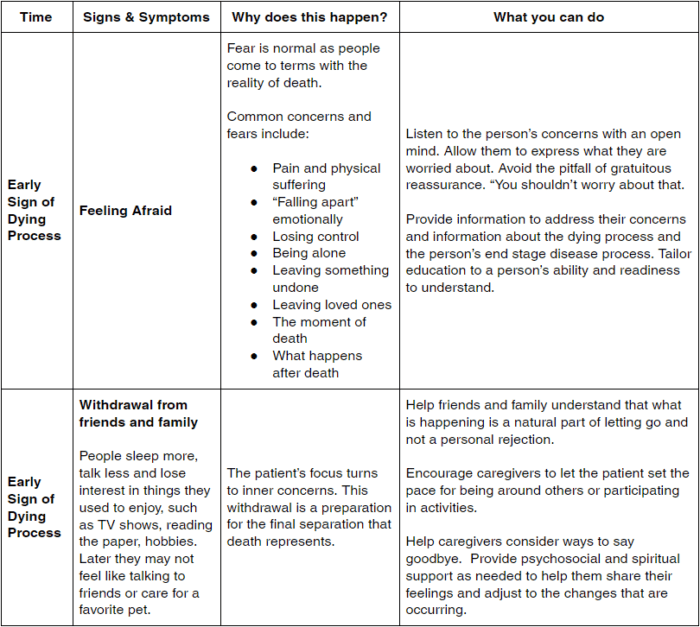
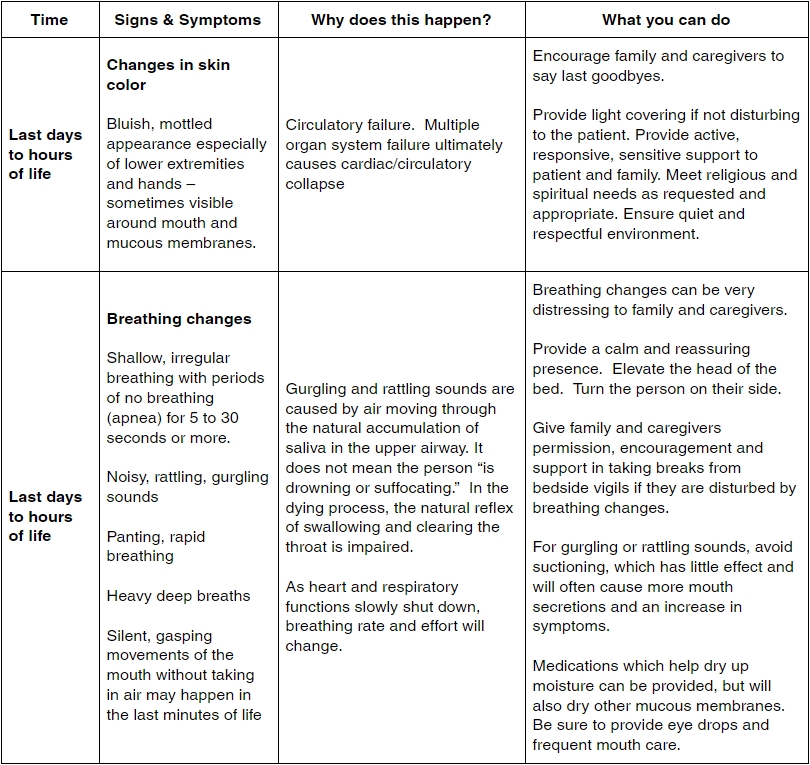
Stages of the Dying Process Table 3
Where treating acute and chronic illness usually involves finding a tolerable path to eliminating or preventing the progression of a condition, treating terminal.
Stages of death & dying. A person will start to detach from social activities and spend more time sleeping. The person receives news that he is dying, and either does not take it seriously or tries to escape from the reality of the situation. This article looks at these steps in the journey of dying.
Any pain that the dying person feels at this point can usually be managed by a doctor in some way, but it can be unbelievably difficult to watch these final steps of a person's life. Describe the five stages of grief and provide examples of how a person might react in each stage. He might say something like, “cancer could never happen to me.
People dying may precede the survivors in this state, which typically. At this stage it is as if the dying person has no memory. Upon learning of their own impending death, dying people's first reaction is often denial, in which they refuse to acknowledge the.
When someone is dying, their heartbeat and blood circulation slow down. Caretakers at hospice care in los angeles tell us that there are three main stages of dying: The active stage of dying has two phases.
Longer periods of sleep occur more often. In the days before death, people often begin to lose control of their breathing. In the context of death and dying, patients, their loved ones, and the health care team must shift their goals.
The skin tightens and a grayish pallor sets in Begin separating from daily routines. The five steps are denial, anger, bargaining, depression, and acceptance.
Since there is no physical movement, no heartbeat, and no movement in the channels, some people think that this is the end of dying; Start to show lack of interest in the television, newspapers and everyday life. Her late 1960s book, on death and dying, described five distinct stages most people will undergo when facing a terminal diagnosis.
Medical professionals in all disciplines work with dying patients, and doing so effectively is difficult. People at hospice care in burbank, ca, gauge these stages in different changes in responsiveness and functioning. The first stage is denial.
It begins with what happens about one to three months before death, then during the last two weeks before death, and then the last few days of life. Not interested in visiting with company or talking on the phone. When we have experienced the distant signs of death, the close signs of death will occur.
The stage right before a person dies is called the agonal phase. In this last stage, individuals embrace mortality or inevitable future, or that of a loved one, or other tragic event. Where treating acute and chronic illness usually involves finding a tolerable path to eliminating or preventing the progression of a condition, treating terminal illness must involve preparing for death as well as efforts to mitigate.
Feel more like withdrawing into our inner realms. For many people, the dying process comes into view at about a month to three months before death. The dying person is often disoriented, and it will seem like he or she can't get comfortable.
These can be categorized into the stages at the exact moment of death and the stages that occur some moments after death. The stages of dying and death. This book is about these 5 stages of dying and how their relation to the grieving process that different stages or periods of grieving are categorized.
The brain and organs receive less oxygen than they need and so work less well. Some of us start feeling less active. The stages of grief are commonly referred to as the 5 stages of dying, as referred to in her book on death and dying.
(even adults can have difficulty understanding “forever,” or that a loved one is “gone” when they die.) they need help to understand why someone has died, and that “death” means the body stops working. Perhaps the best‐known pioneer in thanatology is elisabeth kubler‐ross, who after interviewing 200 terminally ill people proposed five stages of coming to terms with death. What are the 3 main stages of dying?
The early stage, the middle stage, and the last stage. Besides the final stages of death, physicians advise hospice care upon diagnosing a terminal disease where patients are given less than six months. Some of the stages of dying start to be discernible a few months to a month before death occurs.
One to three months prior to death. In the context of death and dying, patients, their loved ones, and the health care team must shift their goals. The stages of death usually refer to various stages a dying person undergoes when preparing for death, given adequate time to prepare.
The physical stages are experienced solely by the person who is dying.