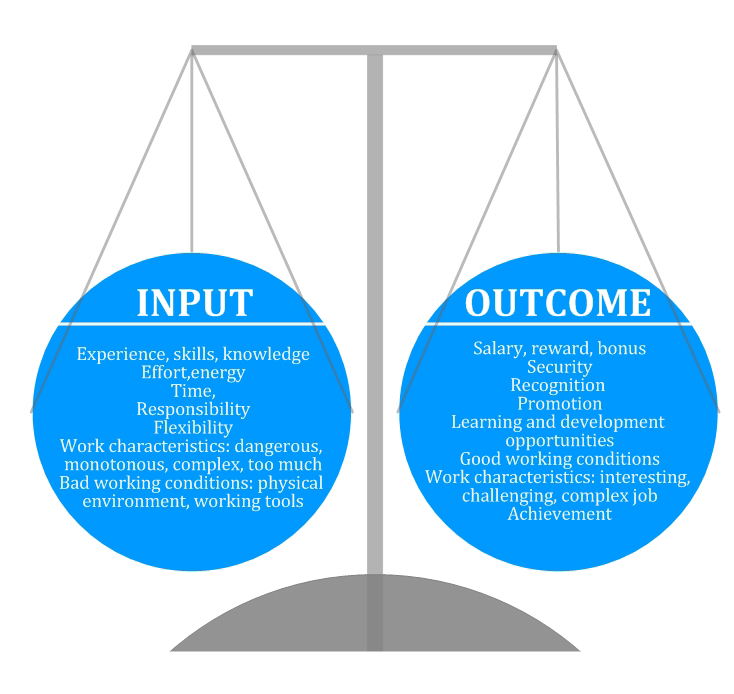
The equity theory of motivation is the idea that what an individual receives for their work has a direct effect on their motivation. In simple terms, equity theory states that if an individual identifies an inequity between themselves and a peer, they will adjust the work they do to make the situation fair in their eyes.
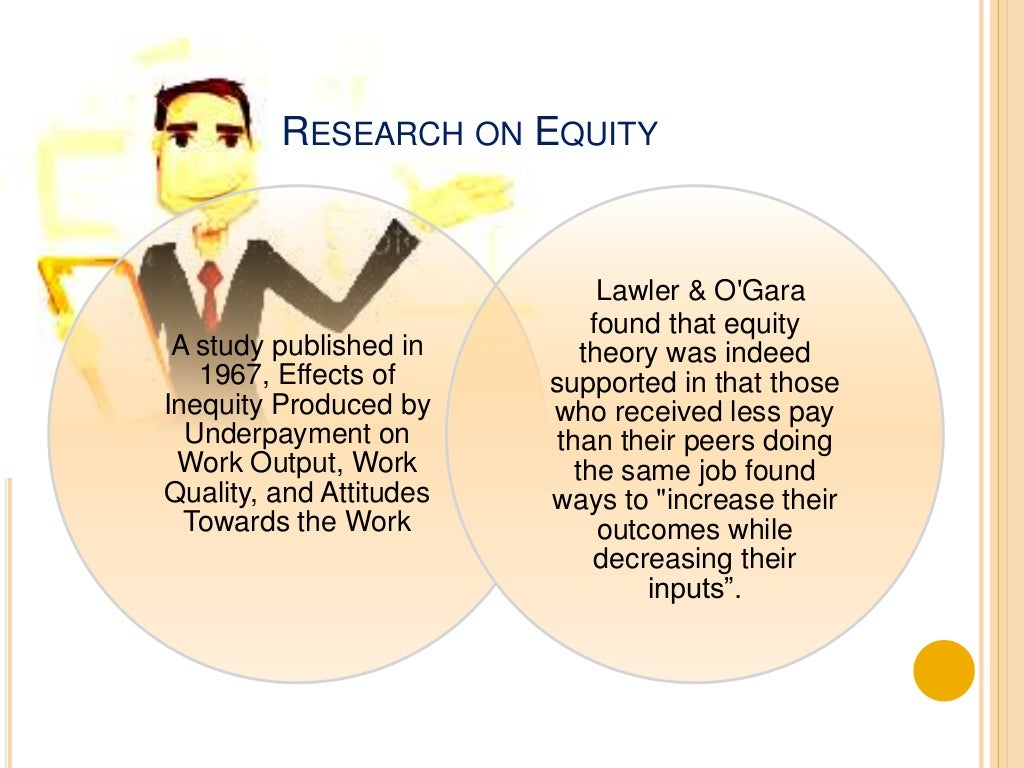
Equity theory
The core of the equity theory is the principle of balance or equity.

What is equity theory. Equity theory is a concept belonging to john s. It does so, however, at the same time. Equity theory is an important philosophy that drives the employees and thus it becomes crucial for managers to pay attention to how it guides as well as misguides the employees.
The equity theory contains two primary components: Employees create a balanced mindset based on inputs they give to the organization and outputs they receive in return. Whenever two individuals exchange anything, there is the possibility that one or both of them will feel that the exchange was inequitable.
Adams suggested that employees try to maintain a balance between what they give to an organisation against what they receive, and base. It was developed by john stacey adams in the 1960s. They use this mindset to compare their inputs and outputs with others.
For business managers, equity theory has various implications: “comparison is an act of violence against the self.”. Equity theory is used in.
Equity theory is based on the idea that individuals are motivated by fairness. Adams, equity theory is concerned with defining and measuring the relational satisfaction of employees. What is the equity theory of motivation?
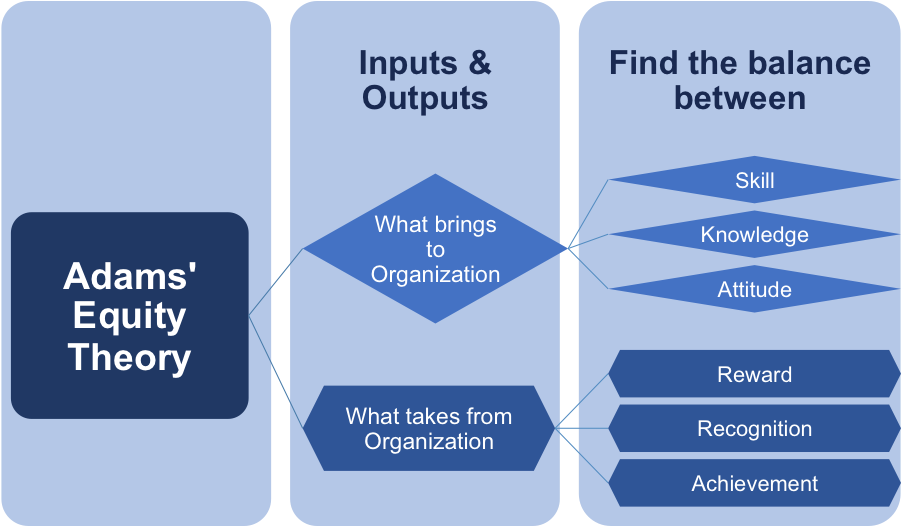
Adams' equity theory calls for a fair balance to be struck between an employee's inputs (hard work, skill level, acceptance, enthusiasm, and so on) and their outputs (salary, benefits, intangibles such as recognition, and more). As per the equity theory, human beings derive motivation and satisfaction in a job. Equity theory proposes that a person's motivation is based on what he or she considers to be fair when compared to others (redmond, 2010).
Employees create a mental ledger of the inputs and outcomes of their job and then use this ledger to compare the ratio of their inputs and outputs to others. Equity theory, popularly known as adam's equity theory, aims to strike a balance between an employee’s input and output in a workplace. Higher is individual’s perception of fairness, greater is the motivation level and vice.
Equity theory has several implications for business managers: Different employees ascribe personal values to inputs and outcomes. They should apply it to understand their employees better and thus be better able to guide them.
When applied to the workplace, it means an individual will generally aim to create a balance between what they give to the organization compared to what they get in return. As per this motivation theory, an individual’s motivation level is correlated to his perception of equity, fairness and justice practiced by the management. Equity theory can be used to understand how employees might perceive unfair circumstances.
People measure the totals of their inputs and outcomes. It the ratio is not equal, then emotional responses will occur that will result in the restoration of equity by itself. Otherwise, the standard of work and services.
Lawyer, inspirational speaker and tv personality iyanla vanzant once said: It is a team member’s perception of these two factors that can influence their motivation levels. Equity theory is a theory of motivation that suggests that employee motivation at work is driven largely by their sense of fairness.
Under the proprietary theory, the entity is the agent, representative, or arrangement through which the individual entrepreneurs or shareholders operate. In a business mindset, equity theory is part of organizational justice, it is the theory of motivation at work that is driven by a sense of fairness. Inputs may include effort, performance.
An input is a contribution one makes to receive a reward. Inputs and results are assigned personal values by different personnel. As we’ve talked about many times here at brighthr, your business needs motivated staff to operate at its full capacity.
Employees measure the totals of their inputs and outputs. The theory helps explain why your employees’ motivation levels can go up and down at work. Though there is much truth to this, it’s only natural to feel.
Crucially, this can help you keep your workforce happy. A manager can ensure the following: Essentially, adams’ equity theory states that people are motivated to put in a.
Equity theory states that people desire the ratio of their outcomes and investments to be roughly. If the employee is able to find his or her right balance it would lead to a more productive relationship with the management. As an example of equity theory, if an employee learns that a peer doing.
Different inputs can include time commitments, daily job responsibilities, loyalty to an organization and. Equity theory is a concept where people want the ratio of their outcomes to be nearly equivalent to the ratio of a referent person or a group. This means a working mother may accept lower monetary.
In this theory, the viewpoint of the owners group is the center of interest and it is reflected in the way that accounting. First developed in the early 1960s by behavioural psychologist john s. This means that a working mother may be willing to accept.
According to the theory, finding this fair balance helps to achieve a strong and productive relationship with the. Equity theory seeks to describe and understand why the beliefs of employees concerning what is right, fair, and just in the workplace matter for organizational performance. Thus, two employees of equal experience and.
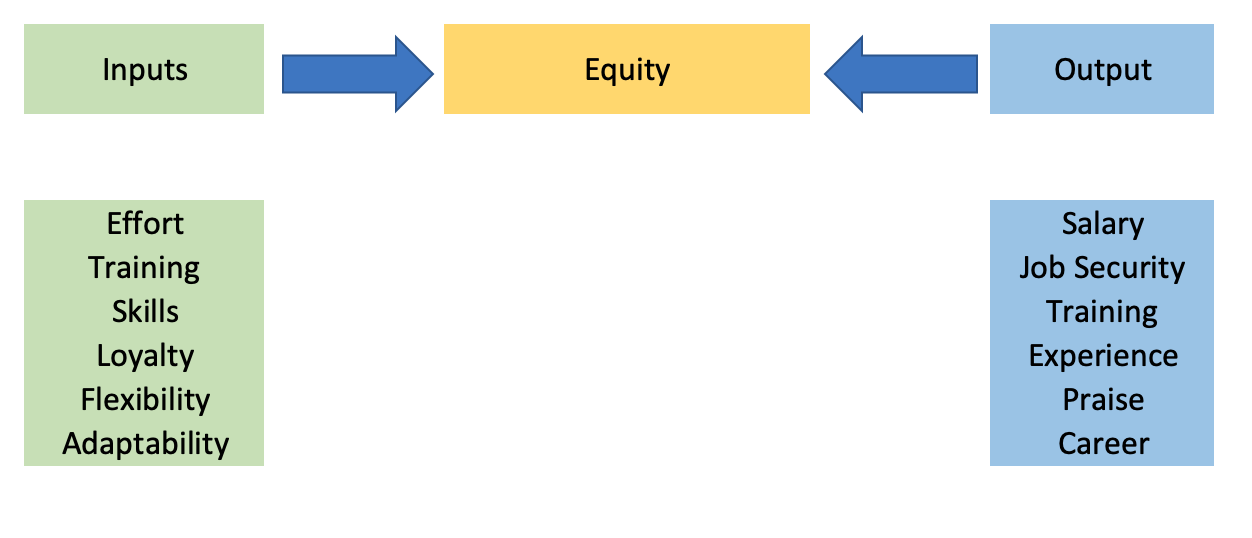
Adams Equity Theory Sanzu Business Training
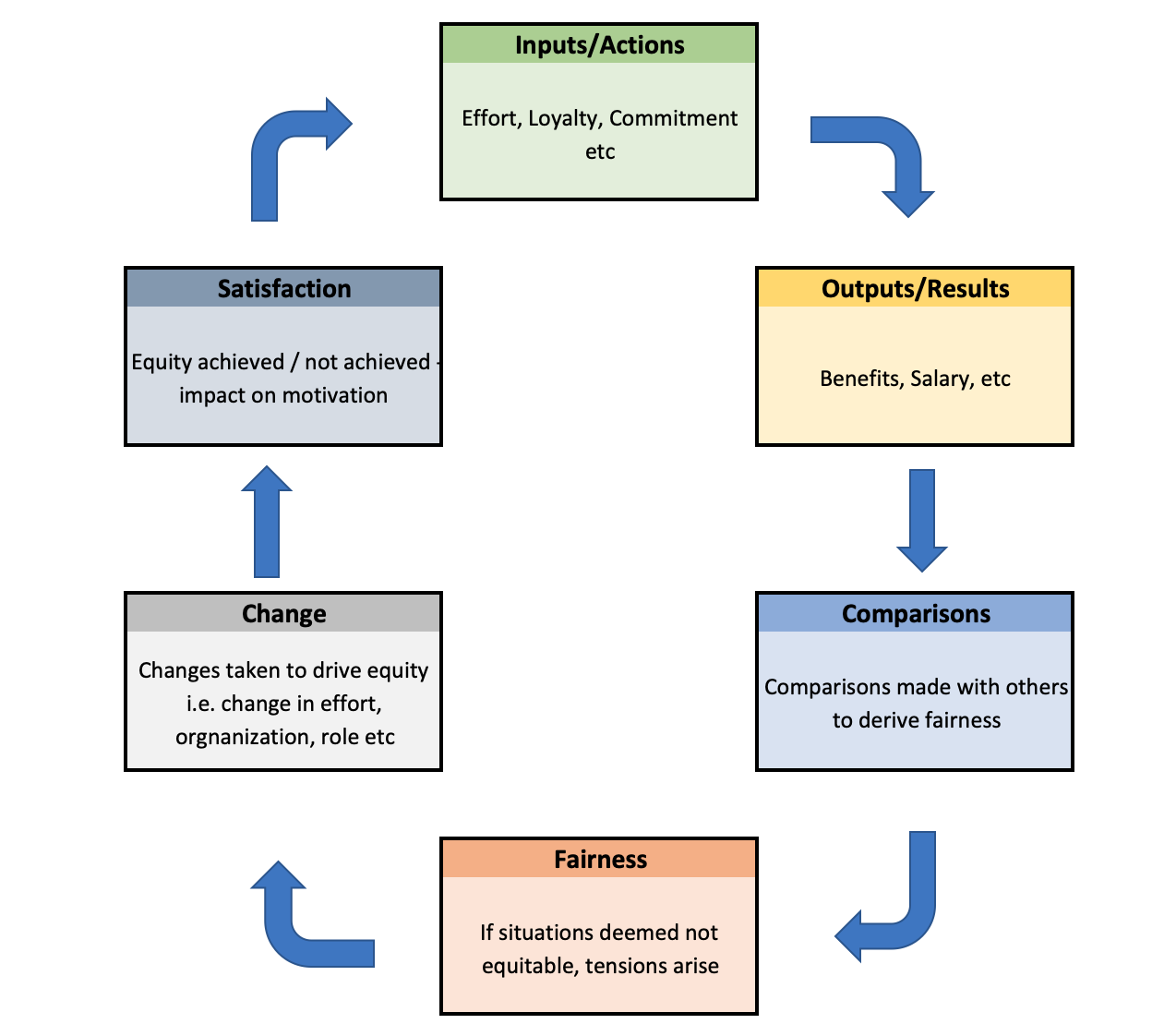
Adams Equity Theory Sanzu Business Training
Adams’ Equity Theory
Equity theory
What Is Equity Theory? Ground Report