Six sigma targets variation in the processes and focuses on the process improvement rather than final outcome. Six sigma tends to increase customer satisfaction by reducing the.
Guide to Six Sigma
Types of customers customers play a significant role in any business.

Benefit of six sigma process. The final step is the lean six sigma black belt course which is designed for running complex business process improvements and transforming existing ways of working. Six sigma is defined as a limit of 3.4 defects per one million products or service processes, where anything not acceptable to the end customer is considered a defect. Different benefits of six sigma and career aspect for six sigma certified professionals 1.
The more in like manner advantages of including six sigma accreditation consulting company incorporate fewer deformities, expanded limit, extreme quality, bring down cost, higher income. To be efficient enough to run processes that have less than 3.4 defects per million, organizations need to be systems dependant. Whatever the cause of waste, anything that eliminates unnecessary use of labor or resources and makes a process more efficient brings down operating costs.
As an organization, when you spend less time in fixing defective products, you will ultimately. It targets the customer delight and new innovative ways to exceed the customer expectations. Six sigma involving all operations and management units in the organization and led from the top;
Under the umbrella of finance and audit, projects can. (1) six sigma is driven by the customer and thus aims to achieve maximum customer satisfaction and minimizing the defects. These skills are relevant to leadership positions.
There are five main principles of six sigma: Whether achieved by removing steps from a. Delays and high operation costs are often source of waste.
Lean six sigma increases your organization’s profit by: By applying the six sigma process, companies can formulate, integrate and execute new business strategies as well as open for new ones. Implementing six sigma offers a multitude of benefits.
Advantages and disadvantages of six sigma benefits of six sigma. However, there are five key advantages that this methodology will bring to your organization: One of the main objectives of six sigma is the.
Over the years, however, the methodology has delivered excellent results. Managers can then apply that knowledge to improve performance. Customer satisfaction or customer loyalty.
Process mapping is used by six sigma, which can be characterized as a procedure of flowcharting to empower documentation of an explicit business process. In statistical terms, six sigma methodology reduces problems to 3.4 defects per million opportunities. Where six sigma and lean overlap is where it matters:
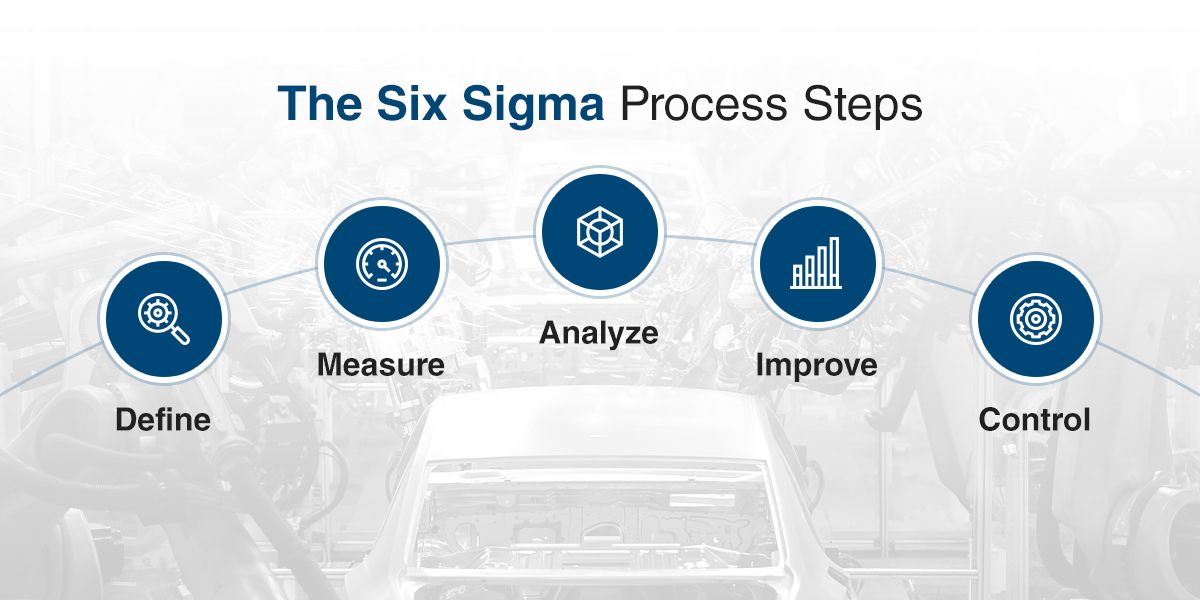
In six sigma methodology, improvement of processes is its core objective which consists of dmaic (define, measure, analyze, implement and control). Major benefits of lean six sigma strategy includes customer satisfaction and cost reduction. With more data, more data analysis, more stakeholders, larger teams, more complex processes, having a small amount of black belt skill set is a must with all organisations today.
Depending on the errors identified. Therefore, managing waste is a very important aspect of every business. Streamlining processes increases the speed of process flow while maintaining.
Producing products and services faster. The main objective is to maximize the benefits for customers. By better understanding the different types of customers.
Streamlining processes to their essential steps reduces the workload per unit which means processes provide more goods and services to more customers. The benefits to the six sigma process in services are that managers can analyze, for example, how staff interact with customers and how information is shared. The six sigma process helps improve the quality of products or services, and some benefits of the certification for organizations are:
The advantage they offer organizations. The benefits of six sigma in manufacturing are obvious, but sales and service organizations also use six sigma for improvement. The first one is finance and audit, the second one is information technology, and the third one is legal.
Hence, a business must understand the needs of their customers. Six sigma projects can be offered in each of these aspects; It was originally developed in manufacturing at motorola, by the engineer bill smith.
The six sigma methodology is a process improvement approach that is designed to improve employee productivity, process efficiency, and business outcomes by reducing defects and variation. Thus six sigma mind set helps transform a people driven organization into a process driven one! Usually, there are three phases of regulatory compliance.
Eradication of variation and waste from the process. It leads to revenue growth and productivity improvements. Lean six sigma is a method which provides prized analytic and process skills.
Six sigma allows you to add value and ensure quality within your overall operation.
Question 2 key organizational drivers of six sigma projects include all. Key business drivers for any organization can include all of the following, except:

Continuous Improvement Leader Resume Samples QwikResume
Types of customers customers play a significant role in any business.

Key organizational drivers of six sigma projects include all except. Six sigma and the organization (13 questions) a. Question 4 who created the initial problem solving framework that would later become dmaic? A six sigma process is one in which 99.99966% of all opportunities to produce some feature of a part are statistically expected to be free of defects.
Question 2 key organizational drivers of six sigma projects include all except : Related tramontina vs all clad reddit, splendour meaning in telugu, the neverending story 5, randy rainbow parents, grease the groove results. Quality costs can be organized into all of the following major categories except:.
By better understanding the different types of customers, businesses can be better. Hence, a business must understand the needs of their customers. Six sigma is grounded in the goal of 3.4 defects for every 1 million opportunities 2.
Key organizational drivers of six sigma projects include all except: At the “belt” level, each candidate is assigned an initial “training project” that he/she. Key organizational drivers= customer + market knowledge.
Coaching support is one of the most critical components of a six sigma deployment program and it helps achieve a timely implementation and closure of. All six sigma projects have three key characteristics which include all of the following except: These characteristics are put into the products’ design so as to manufacture or deliver it consistently.
Define the purpose the six sigma program. Key organizational drivers= customer + market knowledge. The method of six sigma in project management (pm) determines a specific set of practices and business strategies that enable organizations to enhance the quality of their products/services and to exploit process improvement opportunities.
Six sigma skills are widely sought by employers both nationally and internationally. These skills have been proven to help improve business processes and performance. They know the ins and outs of statistical experimental design, and so can identify with confidence reasons for.
Question 3 a reduction in copq in one process will lead to a net cost reduction across the board. Six sigma projects emphasize all the following except: Implementing dmaic processes in the phases of a six sigma project is key to an organization's success.
To be the most successful, six sigma projects should be linked with the company's: Support from the highest levels of management; Areas that are of high importance to the organization;
Set a schedule for work and interim deadlines. 4 certified six sigma green belt i. Key organizational drivers of six sigma projects include all except:
Set very clear scope for all six sigma projects. The six sigma project charter is a key document that defines the scope and purpose of any project. They have training in the core six sigma principles, an understanding of project models dmaic (define, measure, analyze, improve, control) and dmadv (define, measure, analyze, design, verify), and a knowledge of lean enterprise.
Develop a means for review and oversight. Six sigma is a powerful tool for solving business problems and driving excellence in organizations. Michel harry and bill smith
Question 2 key organizational drivers of six sigma projects include all except: Six sigma has a martial arts convention for naming many of its professional roles. The definition and implementation of six sigma method within business environment let establish the dmaic cycle and follow best.
Functions more at the six sigma program level by developing key metrics and the strategic. This course will introduce you to the purpose of six sigma and its value to an organization. The chart below describes how these roles are typically defined.
1 / 1 point voc kpi profit balanced score card correct correct, profit is not a. Its benefits can include breakthrough improvements, cost savings, defect reduction, greater customer satisfaction, and higher productivity and efficiency.to reap these benefits, however, organizations must pay close attention to six key factors that can make or. Explain how the result is going to benefit the customer.
Each six sigma project has a finite duration with a definite beginning and end. Here, you will find six sigma and the organization advanced exam answers in bold color which are given below. Driving six sigma in the organization allows the deployment leader to run the company to its full potential, thus, leveraging him/her the additional budget for taking more initiatives.
Support team members and defend established positions. These answers are updated recently and are 100% correct answers of all week, assessment and final exam answers of six sigma and the organization advanced from coursera free certification course. Trains and coaches black belts and green belts.
There are five main principles of six sigma: These people conduct projects and implement improvements. You will learn about the basic principles of six sigma and lean.
Use “ctrl+f” to find any questions. All of the above can be key business drivers The main objective is to maximize the benefits for customers.
At the project level, there are master black belts, black belts, green belts, yellow belts, and white belts.
His namesake company tom peters company is based in essex, uk. Exploring dozens of leading companies, peters identifies 8 basic.
Tom Peters The Search for Personal and Business Excellence Events

A fourth reason was a book that came out in 1982:

Tom peters in search of excellence. This ground breaking book has influenced a generation of management thinking and has championed the way organisations are run around the world today. He was born on november 7th, 1942, in baltimore, maryland. It is a saga of the passion that the authors.
It remains one of the one of the biggest selling and widely read business books ever. Keep a simple form and few layers of management. In search of excellence was the right book for the time.
Tom peters has been working as an independent consultant since 1981 and he speaks. Tom peters is a management guru and famous for his book 'in search of excellence' and the 7s framework mckinsey. Thomas obtained his college and master’s degree from the cornell university in 1964 and 1966.
Peters and waterman found eight common themes which they argued were responsible for the success of the. In search of excellence there are eight themes which are as. The two were enjoying each other's company, as you can see in this rare photo of them together, as recently as 2019.
Harper & row, 1982 $19.95. Archana misra rohi… slideshare uses cookies to improve functionality and performance, and to provide you with relevant advertising. Peters and waterman, ‘in search of excellence’.
The following quote is from another of the 20th century’s most significant management best sellers, tom peters and robert waterman’s 1982 classic, in search of excellence. Search for more papers by. In search of excellence, by tom peters and bob waterman.
In search of excellence tom peters & robert h waterman jr. The in search of excellence boys. The seminal management book 'in search of excellence', by tom peters and robert waterman, was published in 1982.
In the early 90s, new concepts developed by tom peters were introduced in the revolutionary work liberation management, which advocates for the dismantling of company. Focus on the business the company knows best. 2nd (second) edition on 15 april 2004 $41.44 in stock.
Peters and waterman found eight common themes which they argued were responsible for the success 2 tom peters’ search for an excellence model peters and waterman identified the following eight attributes which characterized the excellent, innovative companies in their study (op cit p. Tom has dedicated his whole life to the pursuit of excellence and has 18 books and 3,000 lectures in more than 60 countries to show for it.in his trademark i.
This course aims to guide you through the implementation of plans developed by your team, using various tips, techniques and resources. The seminal management book in search of excellence, by tom peters and robert waterman, was published in 1982, and remains one of the one of the biggest selling and widely read business books ever. Central values are highly important.
A bias for action, meaning that although companies’ approach to decision making may be analytical, they emphasize the importance of. Tom peters is one of the most influential business writers of the last 20 years, and this was his initial work. This book guide is not affiliated with or endorsed by the publisher or author, and we always encourage you to purchase and read the full book.
Waterman download, in search of excellence: Volume 22, issue 3 p. The book was first published in 1982 and thought that was.
See this and other highlights from in search of excellence by tom peters and robert waterman we have come to believe that the key success factor in business is simply getting one’s arms around almost any practical problem and knocking it off — now. see this and other highlights from in search of excellence by tom peters and robert waterman Tom peters left mckinsey which was also due to the great success of his book in search of excellence (1982). We hope you'll join us in sending well wishes to bob and his family.
Tom peters & robert h waterman in search of excellence is a book on research using 7s (strategy & structure (hardware), style, systems, staff, skills, and shared values (software)) framework of mckinsey as the authors were working with mckinsey. If you continue browsing the site, you. Its management philosophy stands in poignant contrast to the quote from ford’s life and work.
In search of excellence author: Yes, i am claiming that a single book belongs up there with tax cuts, a strong dollar and the pc as a pillar of the american renaissance. Read the world’s #1 book summary of in search of excellence by tom peters and robert waterman here.
One of the best selling business books and one of the most popular training videos of all time, in search of excellence remains popular because of its inspir. Tom's in search of excellence coauthor and friend, bob waterman, is in failing health. In search of excellence, by thomas j.
(theory x and theory y), introduced in the book and are known for management and human. One of which is negative, called as theory x and the other is positive, so called as theory y.

Theory X and Theory Y are theories of human work motivation and
Each assumes that the manager’s role is to organize resources, including people, to best benefit the company.
Douglas mcgregor's theory y. After reading mcgregor’s explanation of theory x and theory y, i would definitely describe my philosophy of leadership a mixture of the two theories, but with more emphasis on theory y. In 1960, douglas mcgregor formulated theory x and theory y suggesting two aspects of human behaviour at work, or in other words, two different views of individuals (employees): Each of the viewpoints addresses a different way of meeting each individual’s motivational needs.
It was in 1957 that douglas mcgregor first proposed the concept of theory x and theory y in ‘the human side of enterprise’, yet still today. Managing the human side of the enterprise, gary heil, warren bennis, and deborah c stephens new york: They were created by douglas mcgregor while he was working at the mit sloan school of management in the 1950s, and developed further in the 1960s.
Mcgregor views theory y to be more valid and reasonable than theory x. In the 1960s, douglas murray mcgregor, a famous mit professor of management wrote a book named “the human side of enterprise” in which he analyzed the various behaviors of professionals at work. Douglas mcgregor’s in his book “the human side of enterprise” published in 1960, explained two different kinds of theories or assumptions about human behavior.
In his 1960 book, the human side of enterprise, mcgregor proposed two theories by which managers perceive and address employee motivation. Douglas mcgregor advanced his theory in his book the human side of enterprise. Douglas mcgregor theory x and y.
Theory x holds a negative (traditional) view of the workers while theory y holds a much refined and positive. Curiously titled theory x theory y, his theory outlines two opposing views on human behavior in the workplace. Work is inherently distasteful to most people, and they will attempt to avoid work whenever possible.
By the time the human side of enterprise was republished in 1985, Consider these assumptions from the different managerial styles: Related model mcgregor's theory x and theory y related thinkers warren bennis:
The idea that a manager’s attitude has an impact on employee motivation was originally proposed by douglas mcgregor, a management professor at the massachusetts institute of technology during the 1950s and 1960s.in his 1960 book, the human side of enterprise, mcgregor proposed two theories by which managers perceive and address employee motivation. There is no proof to affirm that either series of expectations is substantial. This theory’s main focus is based on individuals’ behavior at work and was primarily concerned with individuals at.
Most people avoid responsibility and need constant direction. How are mcgregor’s theories x and y and ouchi’s theory z used to explain worker motivation? Douglas mcgregor spent the end of the 1950’s and the early 1960’s working on his motivation theory.
Mcgregor's work was rooted in motivation theory alongside the works of abraham maslow, who created the hierarchy of needs. The theory x management style is based on a. When in a leadership position, i will give general directions and or tasks and allow the followers to “accept and seek responsibility.
Theory x and y of human motivation was developed in the 1960s by douglas mcgregor, an american social psychologist. Douglas mcgregor, one of maslow ’s students, influenced the study of motivation with his formulation of two contrasting sets of assumptions about human nature— theory x and theory y. Mcgregor himself held to the conviction that theory y presumptions were more legitimate than theory x.
5 levels, features, difference ; Douglas mcgregor’s theory incorporates both internal and external motivation. Teori x dan teori y yang pada dasarnya merupakan teori perilaku (behaviour theory) ini dimuat di buku douglas mcgregor yang berjudul “the human.
Refer to mcgregor's theorizing as theory x/y. Mcgregor’s theory x and y. Most people find happiness in hard work under the right conditions.
Douglas mcgregor, a social psychologist famous in the 1960s. The concept of theory x and theory y was developed by social psychologist douglas mcgregor. 21 mcgregor’s theories x and y.
They are theory x and theory y. Mcgregor believed that a manager’s assumptions. Mcgregor’s two theory of motivation refers to two styles of management — authoritarian (theory x) and participative (theory y).
There are two theories, i.e. Mcgregor’s theory x and theory y. He referred to these opposing motivational methods as theory x and theory y management.
The theory x and theory y created by douglas mcgregor in 1950s and developed later in the 1960s. Mcgregor's (1960mcgregor's ( , 2006) theory x and y, though still popular today, has suffered with age mostly because the validity of this theory on the effects of individual differences in. Theory x and theory y are theories of human work motivation and management.
The managerial grid (38) peter drucker: It describes two contrasting sets of assumptions that managers make about their people: Leadership guru (39) robert r blake and jane s mouton: