The empirical study was developed in. The efqm model was created for improvement of organization based on the principles of the quality management.

EFQM excellence model enablers and results (EFQM, 2012) Enablers are
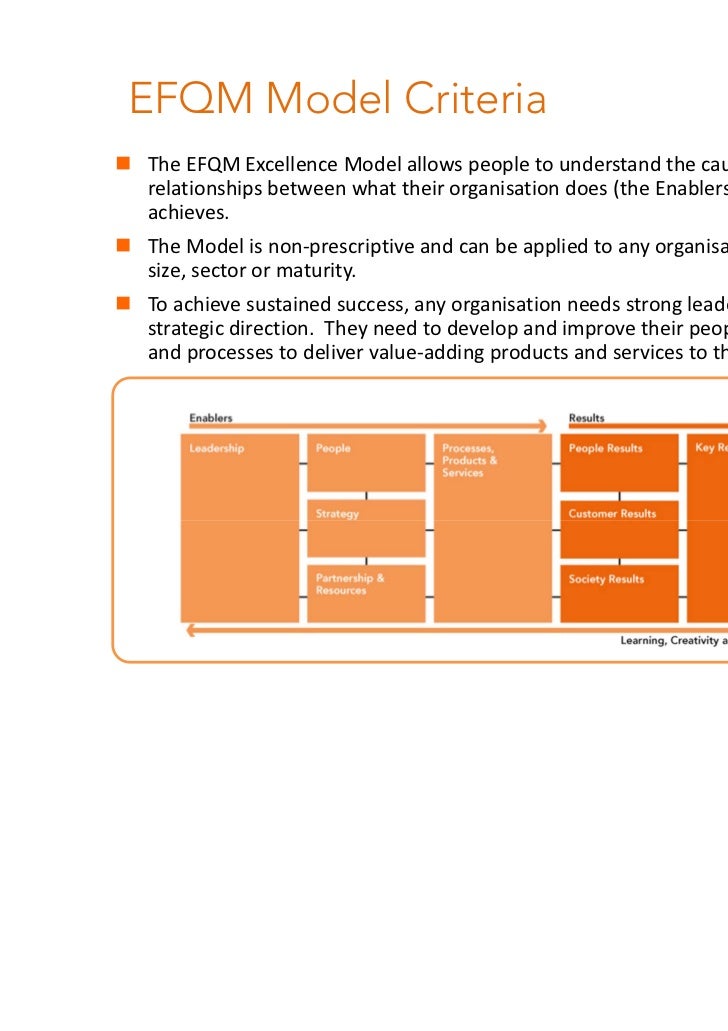
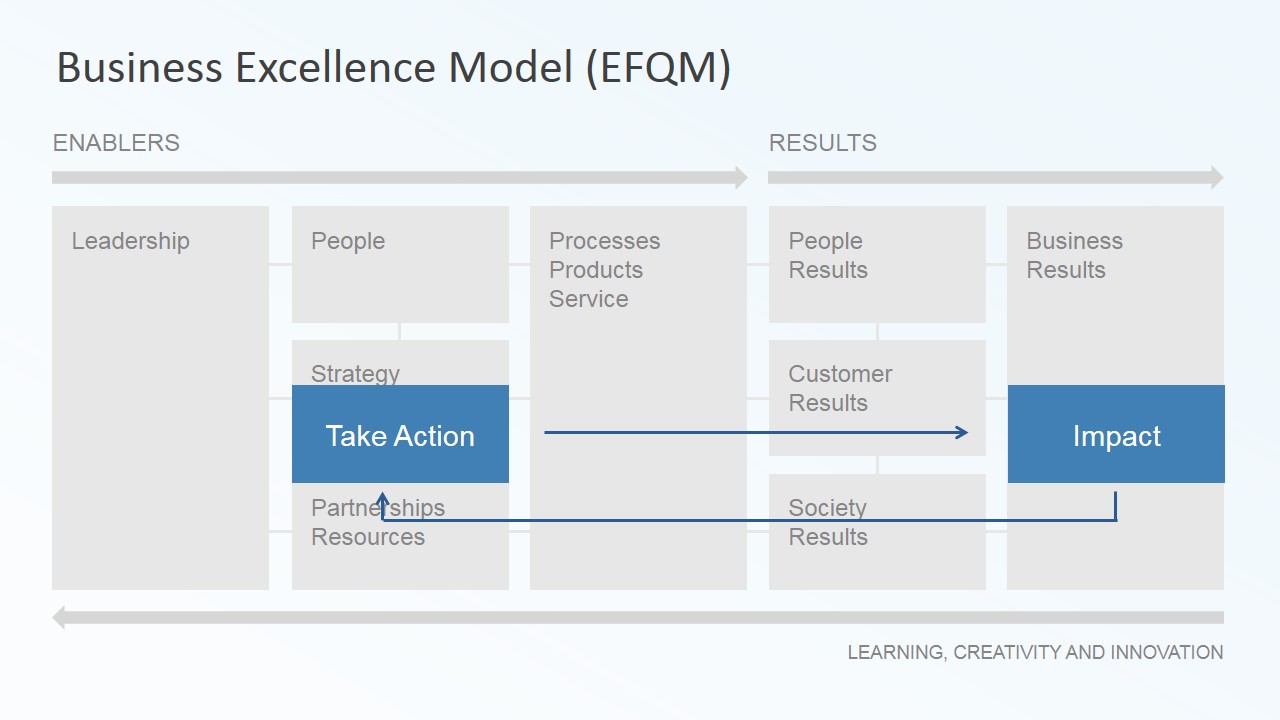
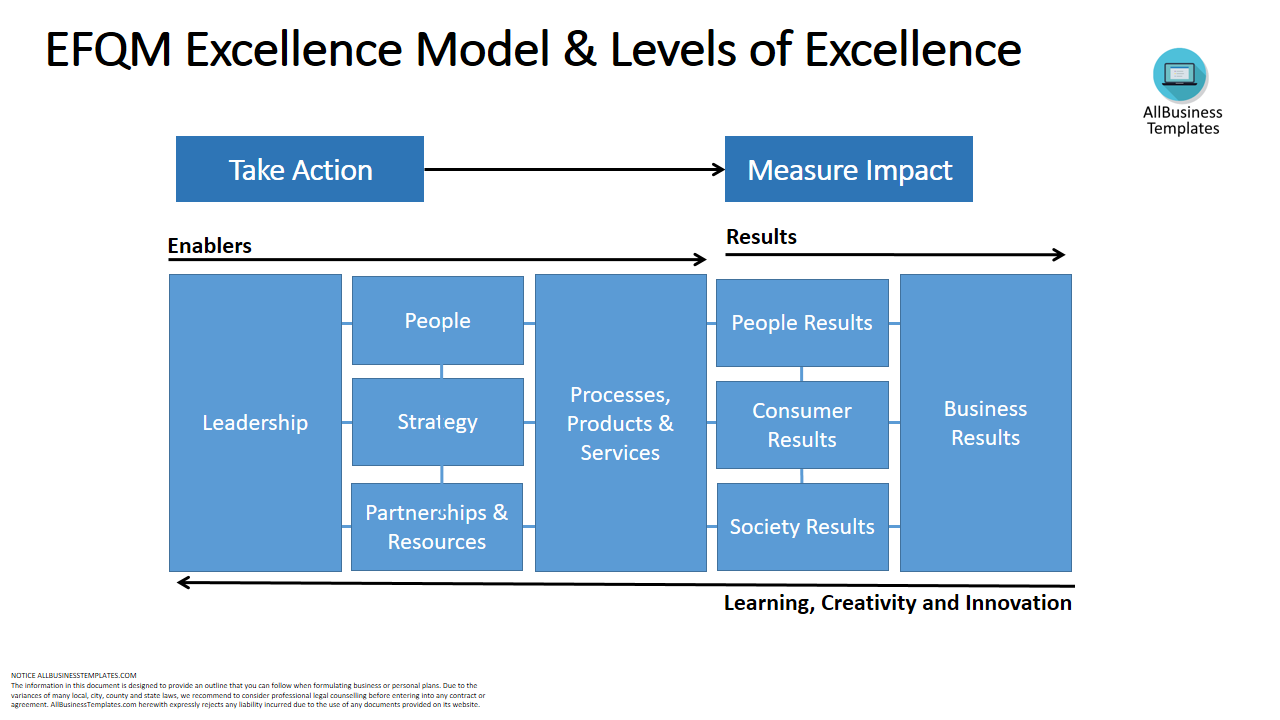
Efqm excellence model provides a framework to understand the relationship between what it does, the enablers, and what it achieves, the results.
Efqm model enablers and results. Trusted by thousands of organisations worldwide for more than 30 years, the efqm model not only remains relevant but continues to set the management agenda for any organisation wanting a long. If the right enablers are effectively implemented, an organization will achieve the results they, and their stakeholders, expect. The 'enabler' criteria cover what an organisation does.
The ‘results’ criteria cover what an. Canonical correlation analysis is used to measure the relationships between enablers and. The arrows emphasize the dynamic nature of the model, showing learning, creativity and innovation helping to improve the enablers that in.
Every company needs to measure its performance. The four results criteria stimulate thinking, particularly during strategic planning, in terms of the range of measures that could be used and challenge us as to whether our organisational objectives and corresponding measures are truly based. The excellence of the result is determined by the.
To describe the implementation of the european foundation for quality management (efqm) excellence model as a common framework for quality. Five of these are ‘enablers’ and four are ‘results’. The efqm model is a management framework helping organizations manage change and improve performance.
The framework of the efqm excellence model is based on nine criteria. Based on the above, in this study, the efqm enablers are interpreted as the overall approach The efqm excellence model ® with its enablers and results is at the heart of catalyst consulting.
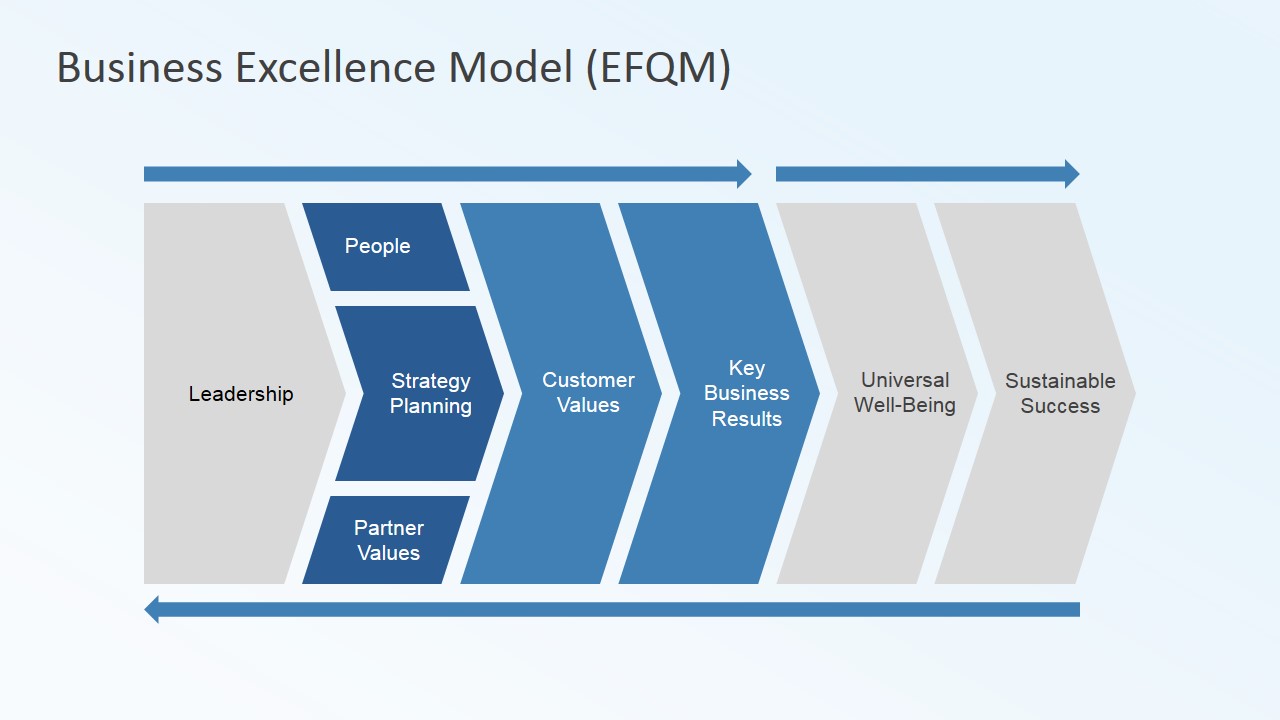
The efqm excellence model is a practical tool that can be used in a number of different ways: Results' are caused by 'enablers' and feedback from 'results' help to improve 'enablers'. The key components of the model are 5 enablers (actions) and 4 results (impact), which describe what needs to be present in the business and what they can deliver.
We have reproduced the model. The design of quality tools and application guidelines, and actions related to criteria of the efqm model. The 'results' criteria cover what an organisation achieves.
The efqm model encourages businesses to answer three questions around direction, execution, and results. La certification qualité a été délivrée au titre de la catégorie d'action: Performance indicators identified in the efqm excellence model are categorised into 5 sections:
Enablers drive results, while results provide feedback to enablers. The purpose of this paper is to examine the extent to which the five european foundation for quality management (efqm) model enablers, as the latent factor “enabler excellence,” are associated with business performance, taking into consideration the mediating role of innovation in this relationship.,the analysis followed in order to investigate the relations. In the efqm excellence model, these are called the enablers.
The criteria of five enablers and four results got restructured into five enablers and two result categories. The assessment starts with a review of the results. There is a dynamic relationship between enablers and the.
The efqm adopts the total quality management idea that the quality control function should take place. The path to excellent results. It was created to help european businesses become more competitive and has since been tweaked and adapted.
“enablers” states actions organisation should take and the “ results” focused on the achievement of the organisation. The efqm model consists of an efqm assessment that enables an organization to determine where they are in the quality process. The logic becomes even more valuable when used with the nine criteria within the efqm excellence model.
The ‘enabler’ criteria cover what an organization does. Target setting, competency and performance management. All elements within enablers and results are not absolutely independent and there are significant linkages between.
The model essentially represents an assessment tool that can be used to decipher what needs to change within the business to improve future performance. The efqm model is a globally recognised management framework that supports organisations in managing change and improving performance. It is the generally accepted framework for business excellence in europe and many other parts of the globe.
Five of these are enablers' and four are 'results'. The efqm model or efqm business excellence model is the most popular quality management tool in europe, used by more than 30.000 organisations to improve performance.
Introducing the EFQM model
EFQM Excellence Model
Business Excellence Model EFQM SlideModel
Business Excellence Model Criteria Template SlideModel
Situational Leadership Efqm Model Enablers And Results