Coined by psychologist bruce tuckman in his 1965 article developmental sequence in small groups, the forming, storming, norming and performing model of group development explains how groups form and what happens in each stage of group development. 2 using the forming storming norming and performing stage for team development.

Storm To Perform The 4 Stages Of Team Productivity
Tuckman’s model is a framework for identifying behaviors on your team, but, as noted by mit, it shouldn’t be used to “box” the team into a profile or “diagnosis.” stage 1:
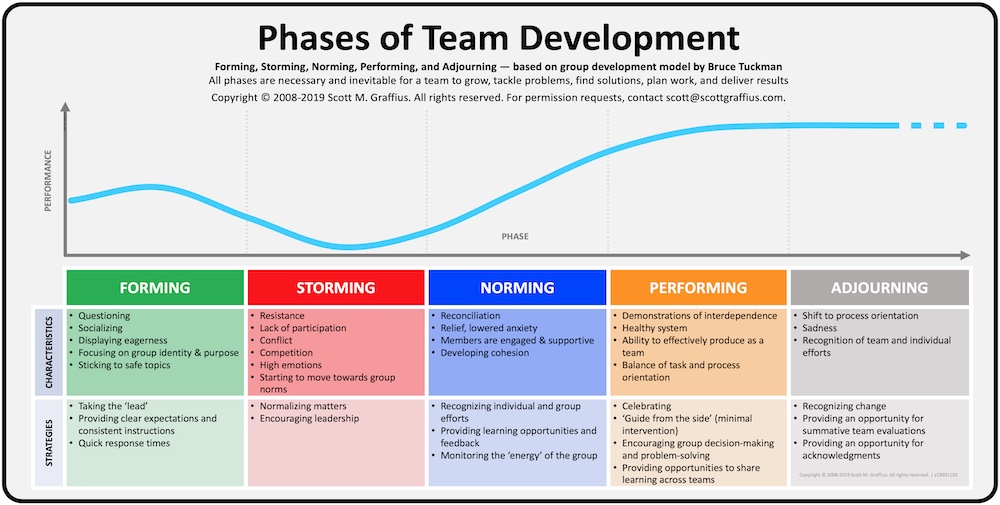
Form storm norm perform model. The name refers to each of the four stages of group development and gives an indication of. Bruce tuckman's model with the stages a team goes through to get high performance. This model was first developed by bruce tuckman in 1965.
The tuckman model describes the phases that groups of individuals go through when they first begin working together as a team. It is one of the more known team development theories and has formed the basis of many further ideas since its conception. Admin — august 17, 2020.
This beginning stage typically happens on the first day or two of camp, though as with any level in this theory, there is no set defined time period. Bruce tuckman first introduced the form, storm, norm, perform model of team growth in 1965. During this introductory stage, conversation between group members tends to be polite, superficial, and exploratory.
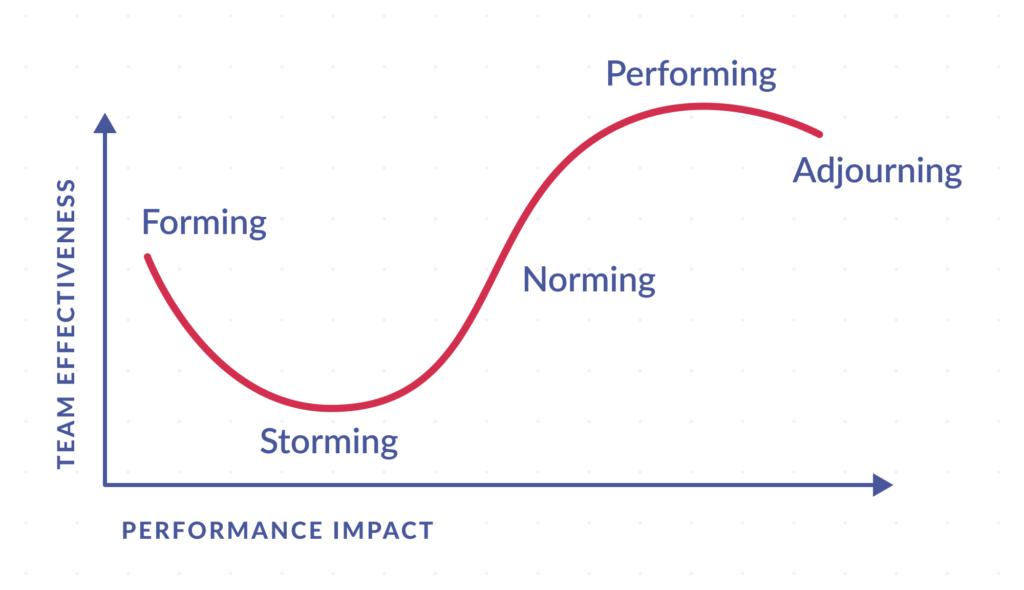
Bruce tuckman's forming, storming, norming, and performing model describes these stages. Teams move through each stage as they overcome challenges, learn to work together and eventually focus on accomplishing a shared goal. His work was based on reviewing over works on team theory and categorised them in stages.
This process comprises of four most important stages. It should be noted that a team can return to any phase within the model if they experience a change, for example a review of their project or goals or a change in. Using this model, an extension professional can help a new team come together and work effectively sooner.
After a while, the halo effect of the newness wears off and when the team realizes there’s actual work to be done, there tends to lose momentum. When teams first get together there is a level of excitement and newness and exuberance to make great things happen. When we closely analyze these.
Because the form, storm and norm stages result in minimal group output; This is the forming stage. 2.2 take steps to help them move forward.
Every group will go through some part of each stage; Forming a team takes time, and members often go through recognizable stages as they change from being a collection of strangers to a united group with common goals. You can't expect a new team to perform well when it first comes together.
In the second phase, storming, teams challenge boundaries and get to know each other and how to work together. The more the group members. It is tempting to try to rush through or short circuit these stages, in the hope the group can achieve peak productivity quicker.
Call us 0800 975 0728. Over the years, i’ve used this model in a variety of settings and continue to be. Know each other and have worked together before, the less time spent in the first three stages.
In the first phase, forming, teams are uncertain about the team goals and how to work together. 3 moving between the stages. 2.1 look at the current status of your team.
He maintained these stages were not only predictable, but necessary and inevitable in order for a team (and i would say an organization) to achieve peak performance. The concept of forming, storming, norming and performing (fsnp) describes the four stages of psychological development a team goes through as they work on a project. Forming a real live team.
Tuckman's theory focuses on the way in which a team tackles a task from the initial formation of the team through to the. More on bruce tuckman's forming, storming, norming, performing. This is the first stage in the group building process.
In tuckman's forming storming norming performing model, hersey's and blanchard's situational leadership® model and in tannenbaum and schmidt's continuum, we see the same effect, represented in three ways. These stages are precisely described under bruce tuckman’s forming, storming, norming, performing model. A team may norm and then storm about another issue or part of the team’s charge.
First days at new jobs, first assignments with new bosses—the forming stage of teamwork is all about first meetings and first impressions. Form, storm, norm, perform and adjourn. So, most of us are familiar with dr.
Staff — january 4, 2013.
Step 2 Forming Storming Norming & Performing Weathering the Storms

Картинки по запросу forming storming norming performing Великие

Forming, storming, norming & performing how a team develops

TUCKMAN GROUP DEVELOPMENT Buscar con Google Onderwijs

Pin on Teamwork